
AB-5 / AB-2257 Compliance for California Event Staffing
California's ABC test is the strictest classification standard in the country. Here's exactly how it applies to brand ambassadors, registration staff, and event hosts — and what the DLSE looks for in an audit.
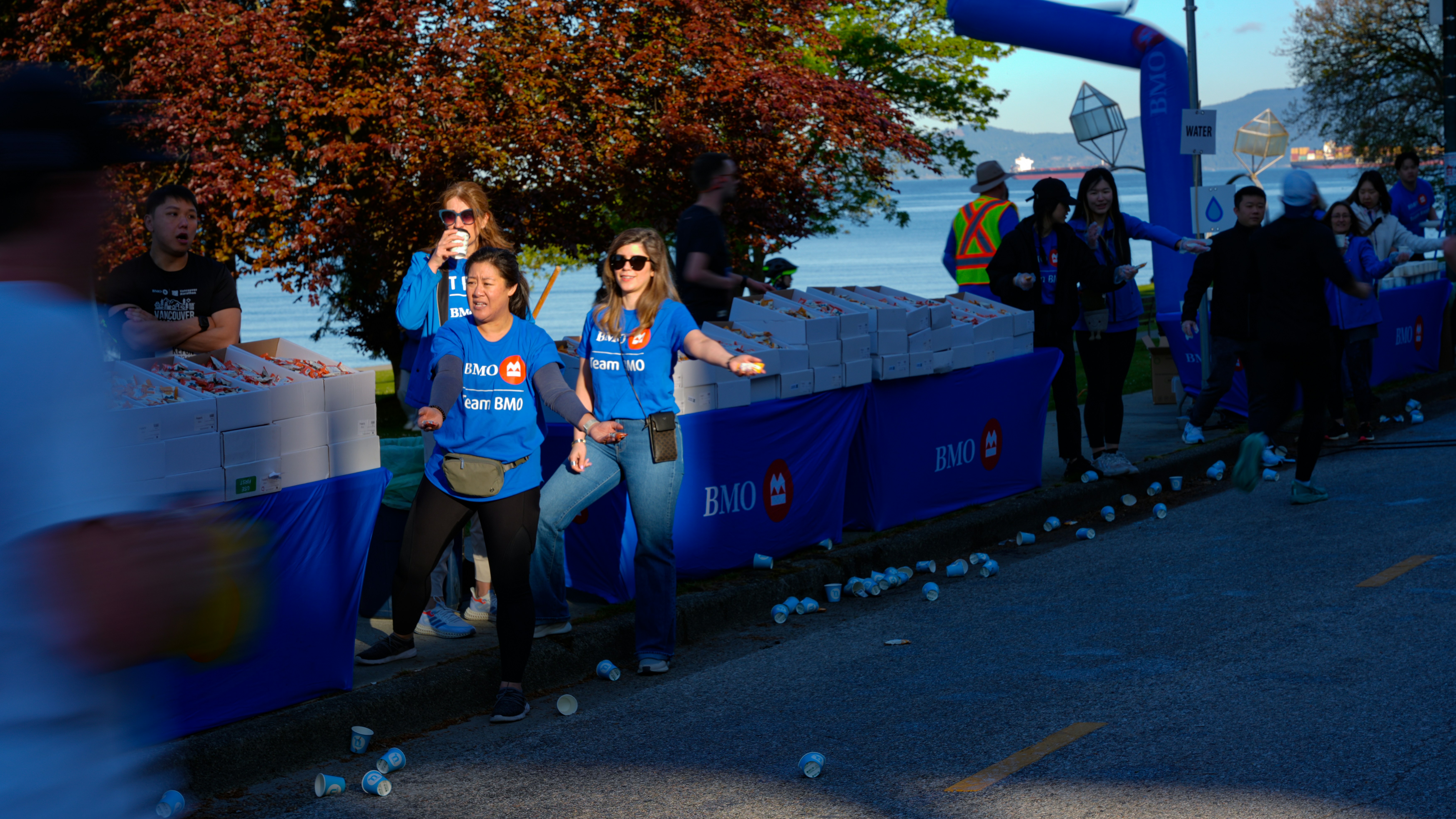
Under California AB-5 / AB-2257, brand ambassadors, registration staff, event hosts, and other typical event-staffing roles are W-2 employees by default. The ABC test only allows 1099 classification when all three prongs are satisfied — and event staff fail prong B (work outside the agency's usual course of business) on its face.
AB-5 codified the ABC test from the Dynamex decision and made employee status the default across the California Labor Code, Unemployment Insurance Code, and wage orders. AB-2257 added occupational carve-outs for fine artists, freelance writers, certain music industry roles, and a list of others — event staffing was not on the list and was not added. The DLSE looks for evidence of control: who scheduled the shift, who set the script, who provided the uniform. If the answer is the agency or the client, classification is W-2. There is no contract language and no business-to-business workaround that escapes prong B for general event staff.
What AB-5 actually did
AB-5 went into effect January 1, 2020. It codified the California Supreme Court's 2018 Dynamex decision, which had imported the ABC test from Massachusetts and applied it to most California wage-hour claims. The bill's plain text turned the ABC test into the default classification standard across the California Labor Code, the Unemployment Insurance Code, and the wage orders.
Under the ABC test, every worker is presumed to be an employee. The hiring entity bears the burden of proving — not by a preponderance, but by establishing all three prongs — that the worker is genuinely independent. Fail any one prong and the worker is an employee. Full stop. No balancing test, no totality-of-the-circumstances, no clever contract drafting that walks it back.
The three prongs, applied to event staff
Prong A: The worker is free from the control and direction of the hiring entity in connection with the performance of the work, both under the contract and in fact. Brand ambassadors arrive at a scheduled call time, wear a provided uniform, follow a written brand script, work at a location the agency or client selected, and report to an on-site captain. They are not free from control. Prong A fails.
Prong B: The worker performs work that is outside the usual course of the hiring entity's business. A staffing agency's usual course of business is providing event staff. Ambassadors providing event staff services to an event-staff agency fail prong B by definition. This is the prong that ends the conversation for staffing agencies — there is no legitimate argument here.
Prong C: The worker is customarily engaged in an independently established trade, occupation, or business of the same nature as the work performed. Most event staff are not running independent ambassador businesses with their own client roster, marketing presence, business license, and corporate insurance. They are taking shifts when offered. Prong C fails for the typical event staff worker.
All three prongs fail. There is no narrow facts pattern that rescues a 1099 classification for general event staffing in California.
What AB-2257 carved out — and what it didn't
AB-2257 passed in September 2020 in response to industry lobbying. It added or modified roughly 75 occupational exemptions and clarifications. Reading the list matters: it tells you exactly who the legislature decided to spare from the ABC test, and by exclusion, who it intentionally did not.
Exempted: licensed insurance agents, certain physicians, lawyers, architects, engineers, accountants, securities brokers, real estate agents, repossession agents, commercial fishermen, freelance writers and still photographers (under capped submission counts), translators, master classes, fine artists, and a list of business-to-business arrangements that meet a twelve-factor test.
Not exempted: brand ambassadors, event hosts, registration staff, product demonstrators, sampling crews, mascot performers, model hosts, talent escort coordinators, promotional models, trade show staff, or any of the other typical event-staff categories. The legislature looked at the carve-out list and declined to put event staffing on it. That is not an accident. It is a policy choice.
The business-to-business exemption is not a back door
The most commonly attempted workaround is the B2B exemption under Labor Code §2776. The pitch from agencies is: 'Our ambassadors form an LLC, contract with us as a business, and we pay the LLC.' This does not work for event staff. The B2B exemption requires all twelve of these conditions to be met simultaneously:
- The business service provider is free from the control and direction of the contracting business.
- The business service provider provides services directly to the contracting business rather than to customers of the contracting business.
- The contract is in writing.
- The business service provider has the required business license or business tax registration.
- The business service provider maintains a business location separate from the contracting business.
- The business service provider is customarily engaged in an independently established business of the same nature.
- The business service provider actually contracts with other businesses to provide the same or similar services and maintains a clientele.
- The business service provider advertises and holds itself out to the public as available to provide the same or similar services.
- The business service provider provides its own tools, vehicles, and equipment.
- The business service provider can negotiate its own rates.
- The business service provider, consistent with the nature of the work, can set its own hours and location of work.
- The business service provider is not performing the type of work for which a license from the Contractors' State License Board is required.
Prong 2 alone — services provided directly to the contracting business rather than to its customers — sinks the typical event-staff arrangement. The ambassador is serving the agency's client (the brand), not the agency itself. The contracting business is the agency, and the customer is the brand. The work is going to the customer. Exemption denied.
What the DLSE looks for in an audit
The California Division of Labor Standards Enforcement opens misclassification audits from three triggers: a worker complaint, a referral from EDD (Employment Development Department) after an unemployment claim, or a routine industry sweep. Event staffing has been a sweep target since 2021.
- The 1099-NEC and 1099-MISC filings from the agency, pulled against EDD records.
- Sample worker interviews — who set the schedule, who provided the uniform, who supervised on-site, what training was provided, whether the worker could refuse a shift and bring on other clients.
- Wage orders applicable to the work. Wage Order 5 (public housekeeping), Wage Order 10 (amusement and recreation), and Wage Order 4 (professional, technical, clerical) come up for event work depending on the venue type.
- Meal and rest break records. The agency has the burden of proving compliance and must maintain timekeeping records under Labor Code §1174. No records = adverse inference.
- Sick-leave accrual records under the Healthy Workplaces, Healthy Families Act.
- Reimbursement records under Labor Code §2802 — phone, mileage, uniform cleaning.
- Workers' compensation coverage in California. EDD cross-references with the Department of Industrial Relations.
Penalty stacking under California law
When the DLSE concludes a worker was misclassified, the penalties stack across multiple sections of the Labor Code. Senate Bill 459, on the books since 2012, imposes civil penalties of five thousand to fifteen thousand dollars per violation for willful misclassification, escalating to ten thousand to twenty-five thousand for patterns or practices. AB-5 left those penalties intact and added more enforcement teeth.
Add waiting-time penalties under §203, meal-and-rest break premiums under §226.7, wage-statement penalties under §226 (the itemized pay stub statute), unreimbursed business expenses under §2802, and PAGA penalties stacked on each of the above with a one-year limitations period and a 75/25 split between the state and the workers. Plaintiff-side attorney fees are recoverable. The math on a roster of even a few dozen ambassadors gets large in a hurry.
The pattern of enforcement
Agencies that have been hit with public misclassification actions in California share a profile. They are typically mid-size shops — twenty to a few hundred annual hires — running brand activations for Fortune 500 buyers, paying 1099, with a roster that includes a substantial bilingual cohort. The triggering complaint usually comes from a single worker after a workers' comp denial or a final-paycheck dispute. The DLSE pulls the 1099-NEC filings, interviews a sample of workers, finds the same factual pattern (set schedule, branded uniform, scripted talking points, on-site supervision), and the matter resolves through a citation or a stipulated settlement that names the agency's largest clients on the joint-employer hook.
Buyers who appear as co-respondents in those proceedings typically have indemnity language in their staffing agreements. Whether the agency can actually fund the indemnity is a separate question. An agency that built its margin on payroll-tax arbitrage has not capitalized for a six- or seven-figure settlement.
What a compliant California event staffing operation looks like
A genuinely AB-5 / AB-2257 compliant operation has, at minimum: California EDD registration as an employer, a workers' compensation policy with California in the schedule, a payroll system that withholds California PIT and SDI, written meal-and-rest break policies with timekeeping records, sick-leave accrual under HWHFA, expense reimbursement under §2802, wage statements that meet §226's nine-item itemization, and a final-paycheck process that meets §203's timing rules.
Showcraft runs this operation across every California metro we serve — Los Angeles, Orange County, San Diego, the Inland Empire, and the Bay Area — with full California employer registration, California-resident captains, and a compliance posture that has held up to procurement diligence from buyers whose own compliance teams have rewritten their vendor standards in the wake of AB-5.
Common questions.
Does AB-5 apply if my event is in California but my agency is based elsewhere?+
Yes. California labor law applies to work performed in California regardless of the employer's home state. An out-of-state staffing agency sending 1099 ambassadors into California for a one-day brand activation is subject to the ABC test for that work. The agency must also be registered as a California employer for unemployment and workers' compensation purposes the moment a single hour of work is performed in the state.
What about a worker who genuinely runs their own brand-ambassador business?+
Even a worker with an LLC, business license, and other clients still has to satisfy prong B of the ABC test — performing work outside the usual course of the hiring entity's business. For a staffing agency, that prong fails on its face. The worker may legitimately operate as an independent contractor for direct brand clients who book her outside of any staffing-agency relationship, but inside the agency she is an employee under California law.
What's the difference between AB-5 and AB-2257?+
AB-5 (2019) codified the ABC test as the default classification standard. AB-2257 (2020) modified the list of occupational exemptions and clarified the business-to-business test. AB-2257 did not weaken AB-5's core ABC test — it added carve-outs for a specific list of professions (freelance writers, fine artists, certain music industry roles, and others) that lobbied successfully. Event staffing was not on the list and was not added.
Can a Prop 22-style exemption be applied to event staffing?+
No. Prop 22 (passed in November 2020) carved out app-based rideshare and delivery drivers from AB-5. It is narrowly drafted and applies to its specifically enumerated network company arrangements. Event staffing is not within its scope and there has been no analogous ballot measure for the event-staffing industry.
If I'm a California buyer, what should I require in my staffing vendor contract?+
A representation and warranty that all workers performing services under the agreement are W-2 employees of the vendor, classified under California law; vendor's California employer ID, EDD account, and workers' compensation certificate naming the California venues; indemnification specifically covering misclassification, wage-and-hour, and joint-employer claims; vendor's written meal-and-rest break policy; and a right to audit timekeeping records on request.
Showcraft Editorial is the team behind every post — drawing on 18+ years of corporate event operations across 11 U.S. metros. We write for procurement teams, event marketers, and HR leaders who need to make a defensible booking decision fast.
Related guides.
W-2 vs 1099 Event Staff: A Buyer's Risk Guide
When a brand ambassador agency sends you 1099 contractors, the IRS doesn't audit the agency first — it audits the company that controlled the work. That's you. Here's how the math actually breaks down.
COI Requirements for Event Venues: A Practical Guide
Every major convention center in the country — Javits, Moscone, McCormick, the LA Convention Center, Mandalay Bay, NRG — has a published insurance rider. If your staffing vendor can't issue the COI by 5 PM the day before load-in, you don't have a vendor. Here's how to read the requirements.
How to Evaluate Event Staffing Agencies
The gap between a mature agency and a marketplace-style staffing app is invisible in the proposal and obvious on event day. Here's the 8-factor framework procurement and brand teams should run before signing anyone — and what good answers actually sound like.
Ready to staff your event? on demand.
Tell us what you're producing. We'll send a quote within 24 hours, COI ready in another 24.